
We are now in the cradle of
liberty. In Lexington we took a trolley tour
with Pat, a wonderful guide who prattled on for an hour and a half about Paul
Revere (Dawes and Prescott are not remembered as much because Longfellow chose
the one whose name rhymed easily), the call that “the regulars are coming” (not
“the British are coming”—everyone was a British citizen) the Minutemen, and the
shot heard round the world in Lexington (no one ever knew which side fired the
first shot), and the REAL shot heard round the world in Concord (where for the
first time, the order was given to fire on the royal soldiers.


The Old Manse was the Emerson home where Ralph Waldo spent time with his grandparents. It later became Nathanial Hawthorne’s first home after his marriage. It also overlooked the North Bridge battle, so Rev. William Emerson’s wife and children were hiding while the preacher fought in the battle.

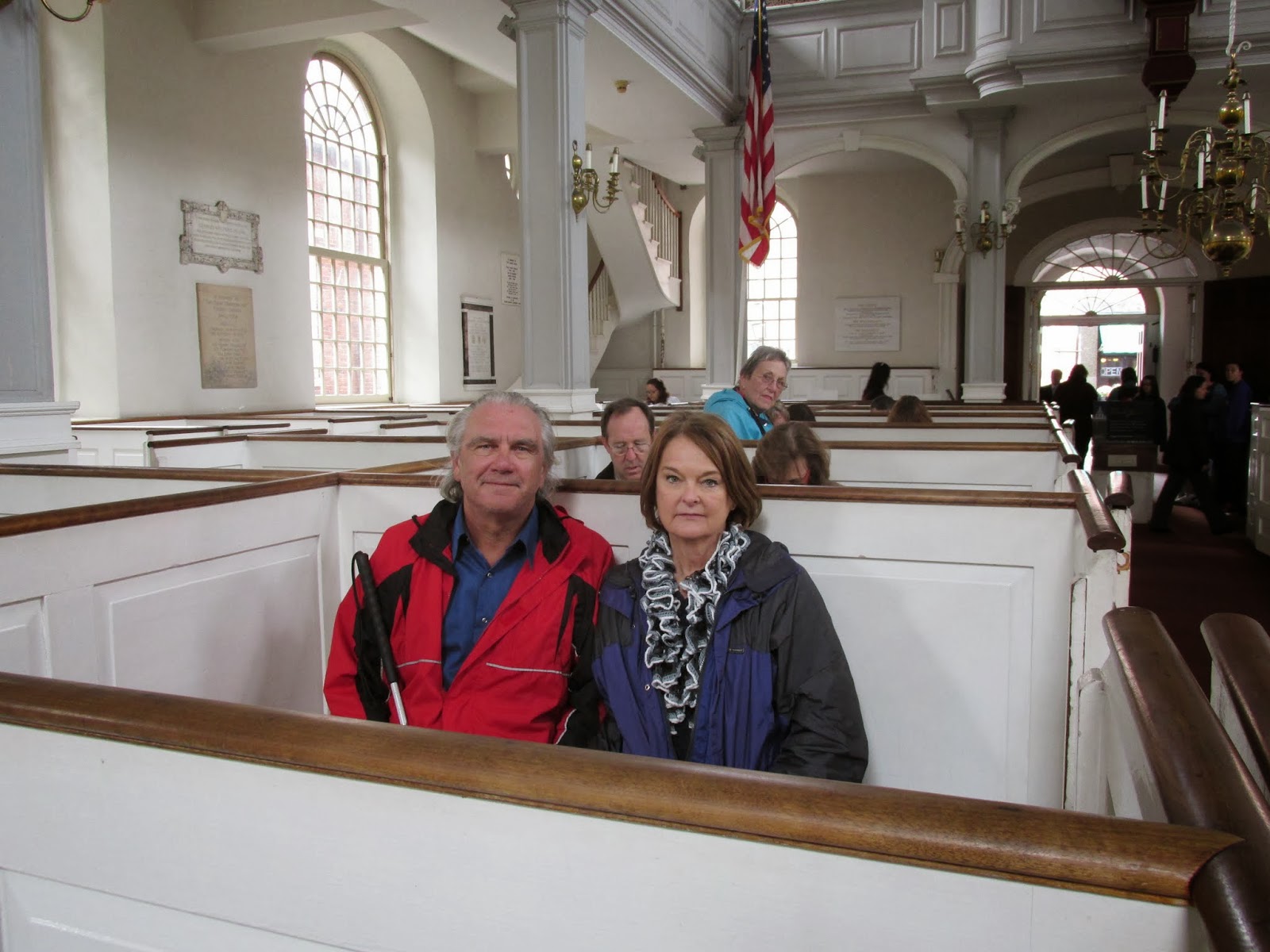
First Parish in Lexington Unitarian where in 1773, citizens met and agreed to the Lexington Pledge "We shall be ready to sacrifice our estates and everything dear, yea, and life itself in support of the common cause."

The Minutemen received some
pay to train and carry with them their musket and ammunition and three days
rations everywhere they went so they would be ready in a minute. The famous statue shows him with one hand on
his plow and the other with his musket.


As we walked around Walden
Pond, I told Don how much I enjoyed teaching “Civil Disobedience” at Concordia. Gandhi and Martin Luther King Jr. both read
Thoreau and were inspired by Thoreau’s willingness to go to jail rather than
pay tax to a government that allowed slavery.


Paul Revere’s home is the
oldest existing house in Boston.

A bell that Revere cast.


Faneuil Hall was one of the
meeting places where colonists met and discussed their growing frustration with
British rule. One test to ferret out
traitors was to ask what the weather vane was atop Faneuil Hall. If the man didn’t know it was a grasshopper,
he was not a true Bostonian.


We left the city for the charming
port town of Plymouth and a lovely campground under the pines. Don is not happy that there are too many
trees to get his satellite dish in, but I think the sunset made up for that.

Plymouth Rock moved around town
a few times, got chipped away, and cracked wide open before it was finally
settled into its protective memorial on the beach just above sea level.


The Mayflower II was built in
England to match all that is known about the original ship, and it sailed to
Plymouth in 1957 entirely by sail, no modern assistance. In 1620 the 102 passengers lived in the hold
with a few chickens, sheep, goats and pigs to start farming in the New
World. They seldom had light, since fire
is the greatest danger in a wooden ship.
The voyage was delayed in fall with the passengers aboard; then after a
two month voyage, they arrived in the lee of Cape Cod in November. They still had to live on board while they
built small houses, one by one.


Plimouth Plantation is a
wonderful living museum in Plymouth.
Native people work in the Wampanoag home-site, dressed authentically,
explaining how they lived in the 1600’s and how the native people continue
today to preserve their heritage.


The Pilgrim village is as authentic as possible with the role players staying in character as they work around their homes and answer questions. Many of us have visited 19th century living museums, but 1627 is a whole different life. These settlers had to stay for seven years in the village working to send salted cod and other products back to England in return for their passage to the “New” England. After that time they were given land to work for themselves instead of for the investors. It was fascinating to hear the women defend the dirt floors as no problem and to vehemently declare that it was enough to wash hands and face and maybe a bit of a sponge bath now and then all winter, but never wash your hair! If it is greasy, the lice won’t come.


The Pilgrim village is as authentic as possible with the role players staying in character as they work around their homes and answer questions. Many of us have visited 19th century living museums, but 1627 is a whole different life. These settlers had to stay for seven years in the village working to send salted cod and other products back to England in return for their passage to the “New” England. After that time they were given land to work for themselves instead of for the investors. It was fascinating to hear the women defend the dirt floors as no problem and to vehemently declare that it was enough to wash hands and face and maybe a bit of a sponge bath now and then all winter, but never wash your hair! If it is greasy, the lice won’t come.


The natives and the colonists
distrusted each other, but the English made a treaty with the Wampanoag to be
allies in case of outside attack. The
Wampanoag had already been weakened by English diseases brought by earlier
explorers and traders. The first
Thanksgiving was not the way we picture it.
Stereotypes of the appearance of both groups are not accurate. The settlers did receive advice and corn seed
from the Wampanoag, and they had a good harvest the first full year there. The men shot many fowl, and the natives heard
that the English were celebrating, so they arrived to share the feast time,
bringing five deer and their families.
They held skill contests together and shared food.


